
Bone Stress Injuries in Boise
Sports Medicine and Physical Therapy Services for Stress Injuries in Boise.
What is a Stress Injury? A stress injury is a small crack in a bone and is usually caused by overuse and repetitive activities. Sports that involve running, jumping, and quick change of direction have potential to cause stress injuries. The repetitive force creates microscopic damage to the bone that would typically heal when adequate recovery and nutrition are provided between bouts of activity. Even nonathletes that suddenly increase their amount of walking (as with military recruits or people on vacation) can develop stress injuries.
Understanding the Injury
What are Stress Injury Symptoms?

What Causes a Stress Injury?
Typically, too much/too soon/not enough recovery causes stress injuries, but other factors can contribute.
Training errors: Stress injuries often are the result of increasing the amount and/or the intensity of the athlete’s training too quickly. Increases in training that should have taken months, instead happen over a few weeks. The metabolic capacity (fitness) improves faster than structural capacity (the bones and joints).
We normally associate stress injuries with athletes involved in training, but stress injuries do occur in previously inactive people that suddenly increase the amount of walking they do. This is often seen with military recruits when they first start basic training or people go on a vacation with lots of walking.
Equipment and biomechanical issues: Improper equipment (worn out shoes, shoes that are too stiff) can further increase these stress loads. Running with a heel strike style increases stress on the shins, femur, and hip. Excessive foot pronation and tight Achilles tendons add extra stress to the tibia.
Bone health issues: In addition, if over-all bone health (measured as bone density or bone mass) is suboptimal (osteopenia or osteoporosis), the bones have less ability to withstand the training stress and the risk of developing a stress injury is increased. Chronic low energy (calories) intake can decrease bone health and combined with inadequate calcium and vitamin D intake can increase the risk of stress injuries.
Know the Injury
Where Do Stress Injuries Occur?
What Happens During the Physical Examination?
During the medical exam, the doctor will evaluate the patient’s risk factors for a stress injury. This includes how long the pain has been present, training history before and after pain arose, status of shoes, menstrual history, history of previous stress injuries, and a brief nutrition assessment.
X-rays are usually taken to look for a stress injury. The stress injury starts as a small crack and can be hard to see initially. The injury is more visible once it starts to heal, then the healing bone (callus) can be seen on x-ray.
Bone scans or MRI scan are more sensitive than x-rays for detecting stress injuries and may be used to get an earlier diagnosis (rather than waiting for the healing injury to be seen on x-ray). These imaging tests can also help determine the severity of the injury.
What is the Treatment?
The most important treatment is rest. Athletes need to rest from the activity that caused the stress injury. Most stress injuries will heal in 6 to 8 weeks. During this time, cycling, swimming, pool running can be used to maintain fitness. It is important to follow your doctor’s recommendations. Returning to activities too soon can delay healing or create situations where the injury will not heal on its own.
When your doctor allows low-impact activities, incline walking on a treadmill, using an elliptical machine, or running on an Alter-G treadmill can be used. Walking on a treadmill at 15% incline and 3.6 mph has the same aerobic cost as running on a flat surface at 9 min/mile pace.
Who is at High-Risk for Stress Injuries?
Individuals of prior history with stress injuries, individuals with a history of menstrual irregularities, individuals with a history of low mineral density, and individuals in high impact and endurance sports are all at a higher risk for stress injuries. If a stress injury goes unrecognized and the individual continues to stay active, the injury can worsen, leading to a complete break. This can have serious consequences and requires urgent surgery. It is important to recognize a stress injury early to prevent this from happening. While this is true for all stress injuries, stress injuries in the femur and femoral neck at the hip are especially high-risk for devastating outcomes if not treated early.

How Can I Prevent Stress Injuries?
Frequently Asked Questions
Are Women More Susceptible to Stress Injuries Than Men?
REDs can increase risk in women more so than in men. Female athletes experience more stress injuries than their male counterparts. This may be linked to the REDs (Relative Energy Deficiency in Sport) syndrome. The primary component of REDs is low energy availability (EA). EA refers to the amount of energy available for normal physiologic processes, after the demands of training are met. Women with history of amenorrhea may have decreased bone mass and have a higher risk of stress injuries even if training loads are not too excessive.
However, men and women of all ages who participate in repetitive sports like running can develop stress fractures. Athletes of either gender with normal bone health can develop stress fractures when training volume and/or intensity are increased too quickly, and inadequate recovery is provided.
How Can I Ensure Long-Term Bone Health?
There are two main points concerning bone health:
First, 90% of peak bone mass is achieved by age 20 and reaching maximum values by age 30. The goal as you get older becomes to minimize the age-related decline in bone mass. And second, research suggests that it is very difficult to generate a significant and sustained osteogenic stimulus that can improve bone health to offset age-related bone loss. The bone mass you develop early (up until age 30 or so) is the bone mass you must live off as you get older. Unfortunately, young athletes may sacrifice their bone health while in high school or college believing the misconception that they can restore bone health once the athletic career is over. Encouraging adequate nutrition during youth and teenage years, incorporation of strength training, and ensuring that energy intake matches energy output, is crucial for young athletes. Female athletes who have a history of multiple stress injuries in high school and college, may be at high-risk for developing osteoporosis at a relatively young age.
Is There Surgical Treatment?
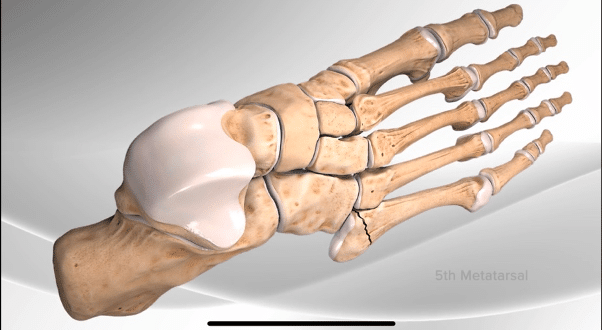
Certain stress injuries may require surgery to heal properly. In most cases, this involves stabilizing the bones by inserting some type of fastener. Pins, screws and/or plates can be used to hold the bones together during the healing process. Stress injuries in the 5th metatarsal foot bone (outside toe) and in the navicular and talus bones in the ankle often require this internal fixation to heal correctly.
What is the “Dreaded Black Line”?
Stress injuriues in the tibia that go untreated can develop in to the “dreaded black line” which is seen as a transverse injury line across the entire shaft of the tibia. Injuries of the anterior cortex of the tibia have a high likelihood of delayed healing or a non-union. An intramedullary nail is inserted in the length of the tibia to stabilize the bone allowing it to heal.
Need Help with Chronic or Recently Injured Stress Injury?
Schedule Your Appointment Today!