
Rotator Cuff Tears in Boise
Sports Medicine and Physical Therapy Services for Rotator Cuff Tears in Boise.
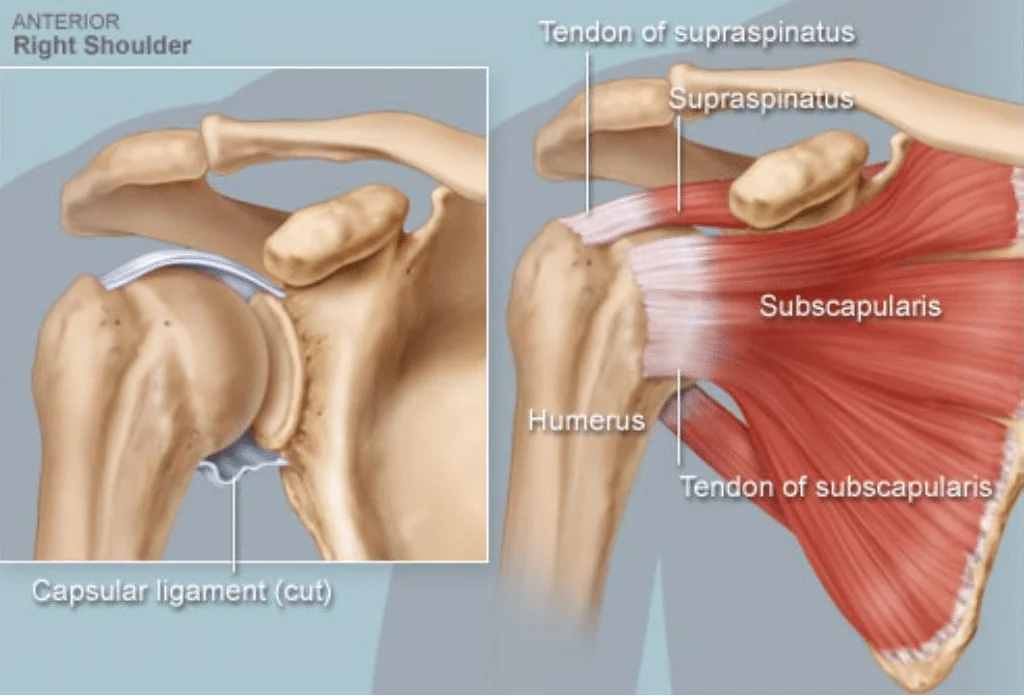
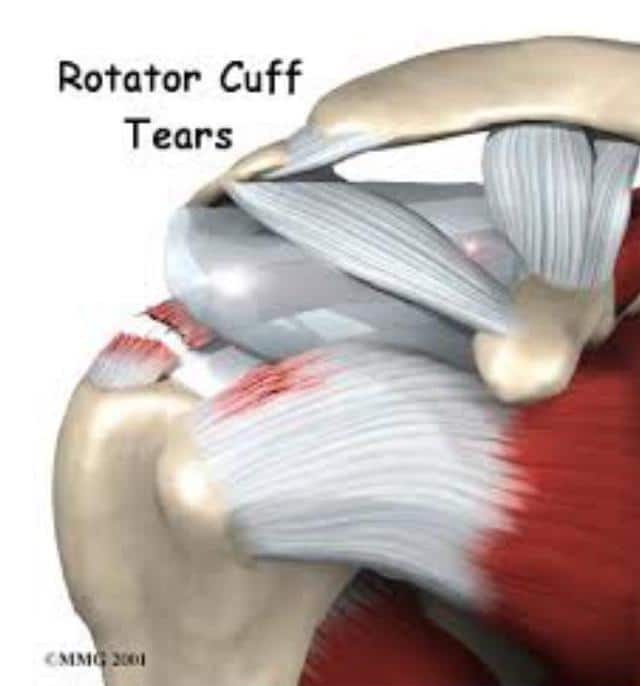
What are Rotator Cuff Tears? The shoulder is a unique joint that has a nearly 360 degree range of motion. This is accomplished by having a round “ball” of bone (humeral head) connected to a small flat “socket” of bone (glenoid) that is rimmed by cartilage (labrum). The ball is held in the socket by two different tissue layers. The inside layer is composed of capsular ligaments that connect the humerus to the glenoid. The outside, dynamic layer, is your rotator cuff. Dynamic means the muscles contract to stabilize the joint. The rotator cuff comes off of the shoulder blade (scapula) and usually tears where the muscle attaches to the humerus through the tendon. When a rotator cuff is damaged you may notice weakness and/or pain with activity. If your joint is not well stabilized, it may also lead to loss of range of motion and arthritic changes in the shoulder joint down the road. There are 4 rotator cuff muscles: supraspinatus, infraspinatus, subscapularis and teres minor. The supraspinatus tendon is the most commonly torn part of the rotator cuff.
Understanding the Injury
How Do I Tear My Rotator Cuff?
Are There Different Types of Tears and What are Symptoms of Each Type?
Know the Injury
How Are Rotator Cuff Tears Diagnosed?

Do I Need Imaging Studies?
If I Have a Rotator Cuff Tear, Do I Need Surgery?
If I Choose Surgery, What Does That Mean?
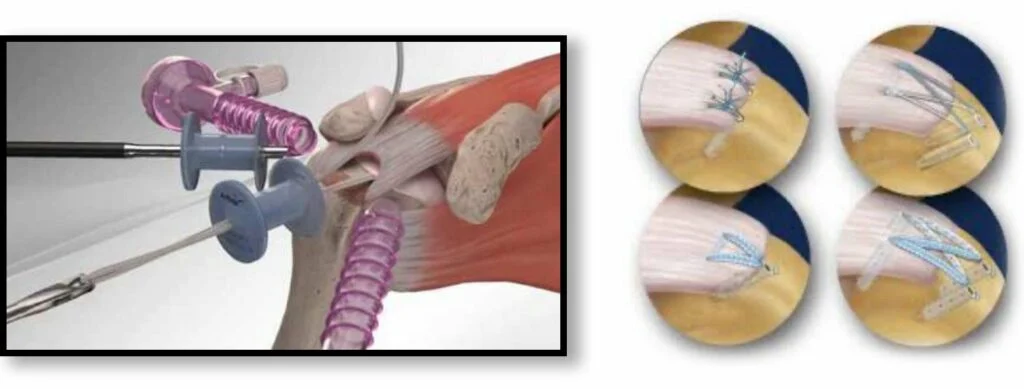
Historically, rotator cuff repairs were performed through large incisions to expose the tendons and overnight hospital stays. Today, with the aid of the arthroscope, most surgeries are performed in the outpatient setting with patients going home the same day. The arthroscope allows excellent visualization of the rotator cuff from its underside within the joint (articular side) and from above in the subacromial space (bursal side) and allows for placement of repair devices through small plastic cannulas. This is performed through 3 or 4 small incisions (portals). The cuff is repaired using small anchors in the bone with the attached sutures passed through the cuff tendon. Suturing the tendon to the bone seals the tear from the joint fluid and the compression of the tendon on the bone encourages healing of the tendon to the bone. If the tissue quality is less reliable or the tear pattern is complex, after the initial arthroscopy it may be helpful to expand one of the small incisions into a slightly larger one, splitting but not cutting any muscle fibers (“mini-open” technique), to perform a reliable repair.

How Long Is The Recovery After Surgery?
During the first 3-6 weeks, the shoulder is immobilized (sling with a large pad holding the arm out) to protect the repair and allow the swelling and pain to decrease. It also helps you learn to avoid using your arm for lifting, pushing or pulling. You can do simple pendulum exercises and move the elbow to avoid stiffness. Physical therapy is then started to begin working on range of motion and wake up the muscles around the joint.
A tendon takes about 10-12 weeks to heal to the bone. By three months, most repairs are “healed” but the cuff muscles are weak, as they should not be stressed with exercises in the early healing phase. It will take another 2 months or more of rotator cuff and scapular stabilization exercises to regain enough strength to use the shoulder normally or return to overhead activities or sports.
Need Help with Chronic or Recently Injured Rotator Cuff Tears?
Schedule Your Appointment Today!